
Last updated November 22, 2026
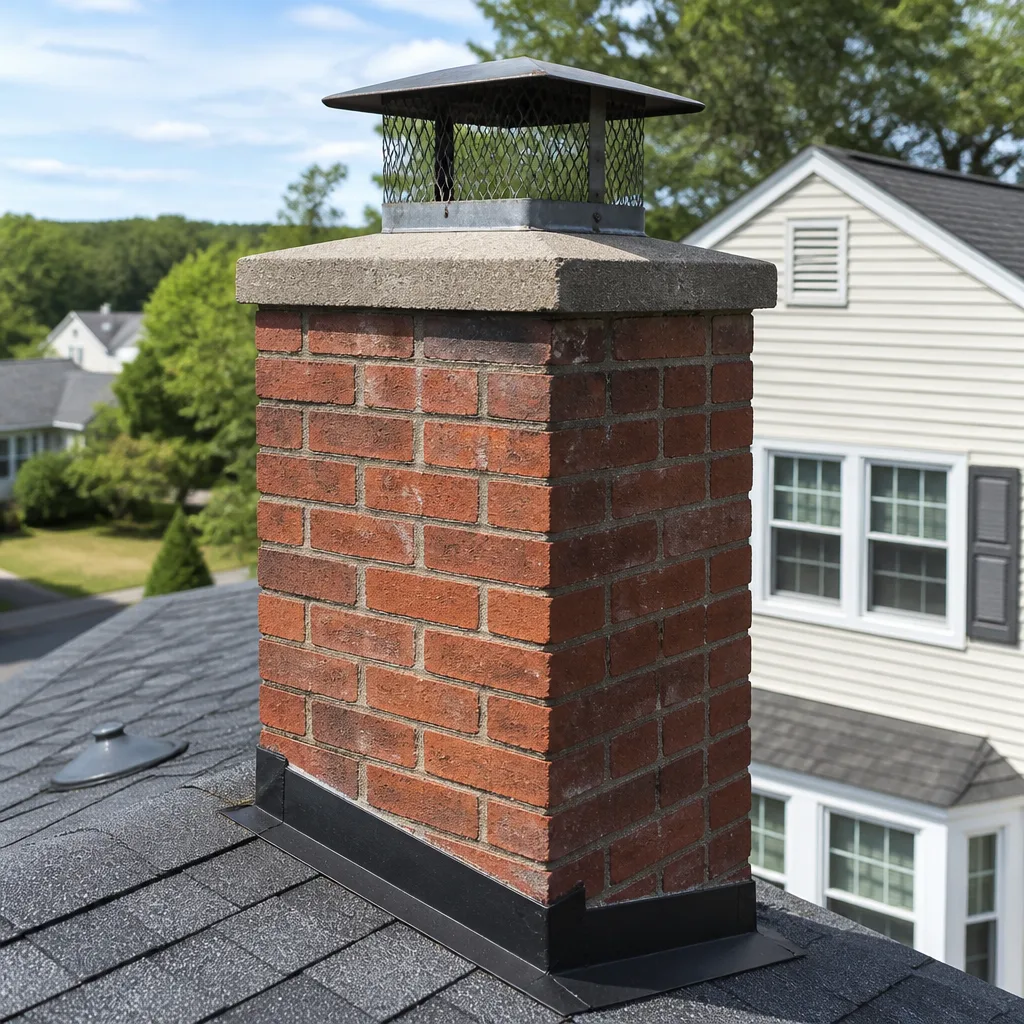 Sweep & inspection
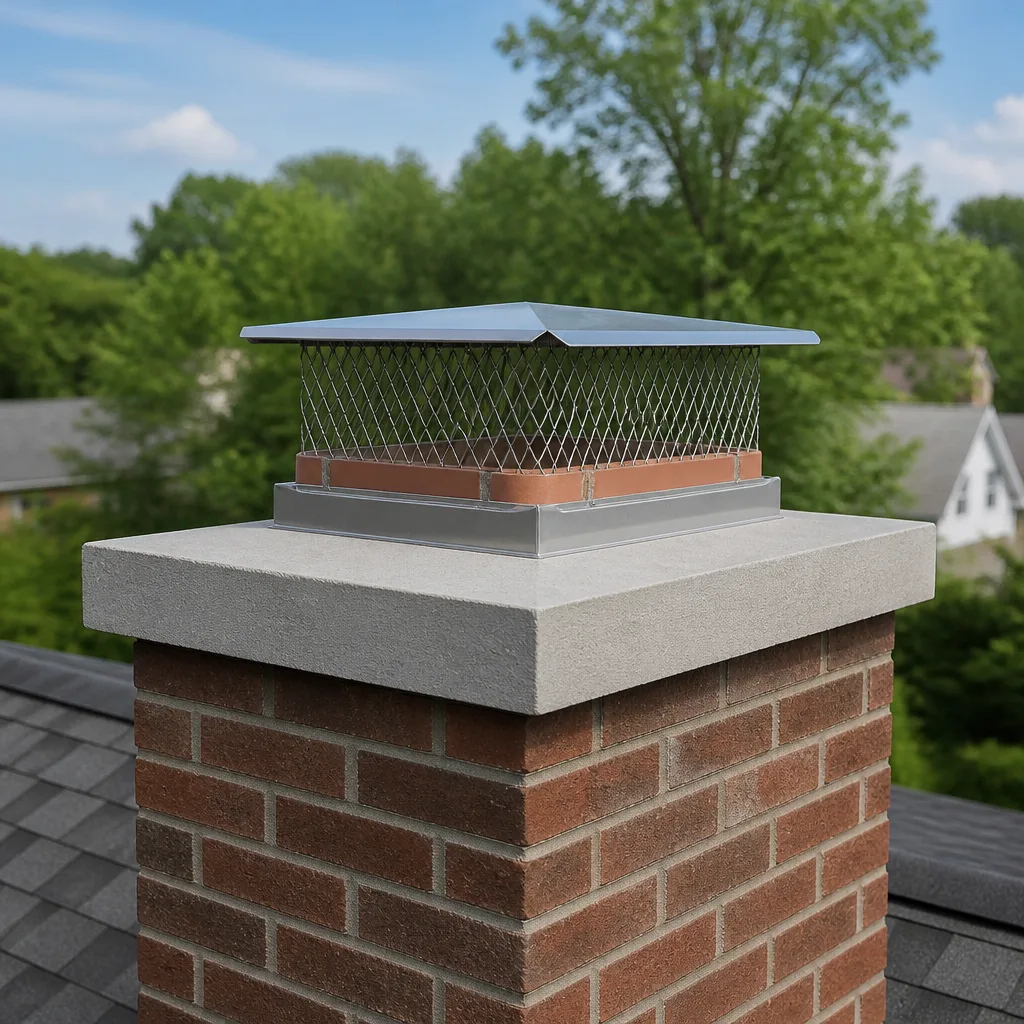 Caps & crowns
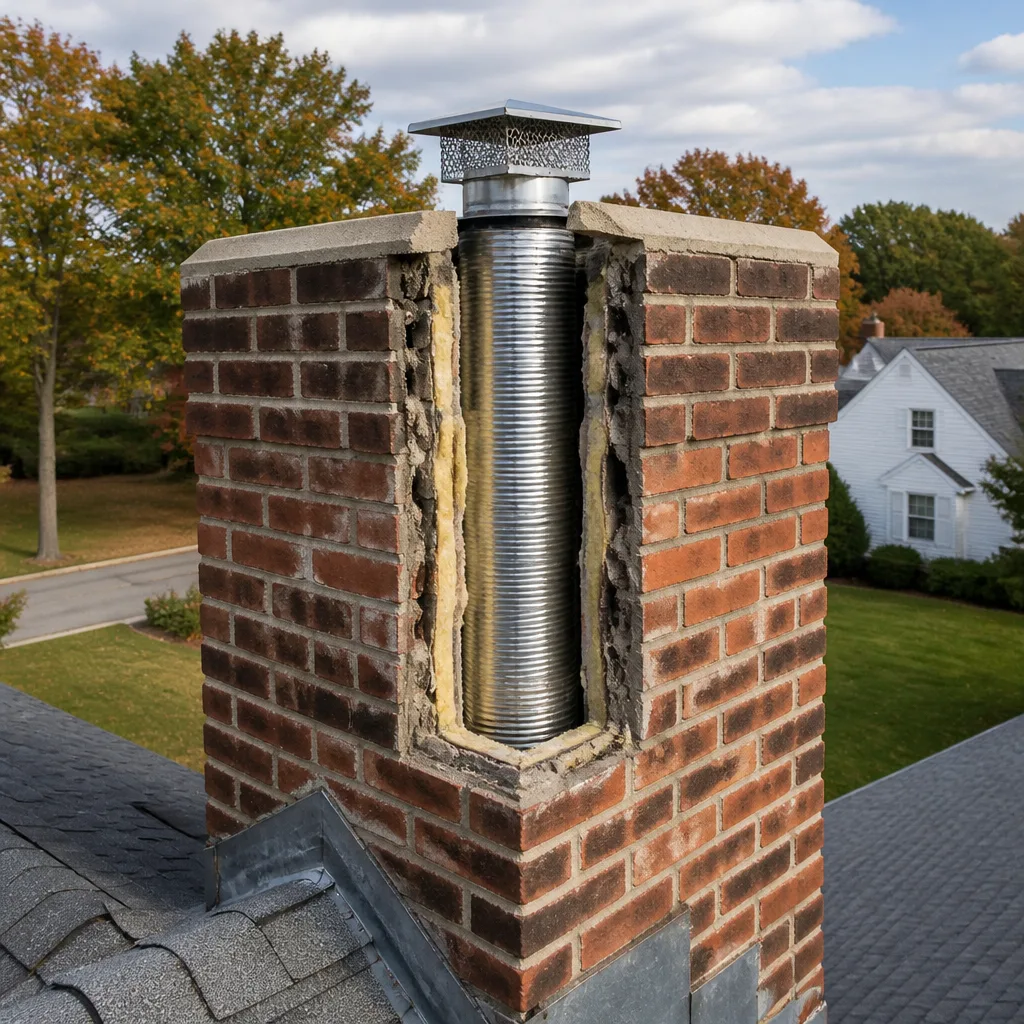 Flue relining
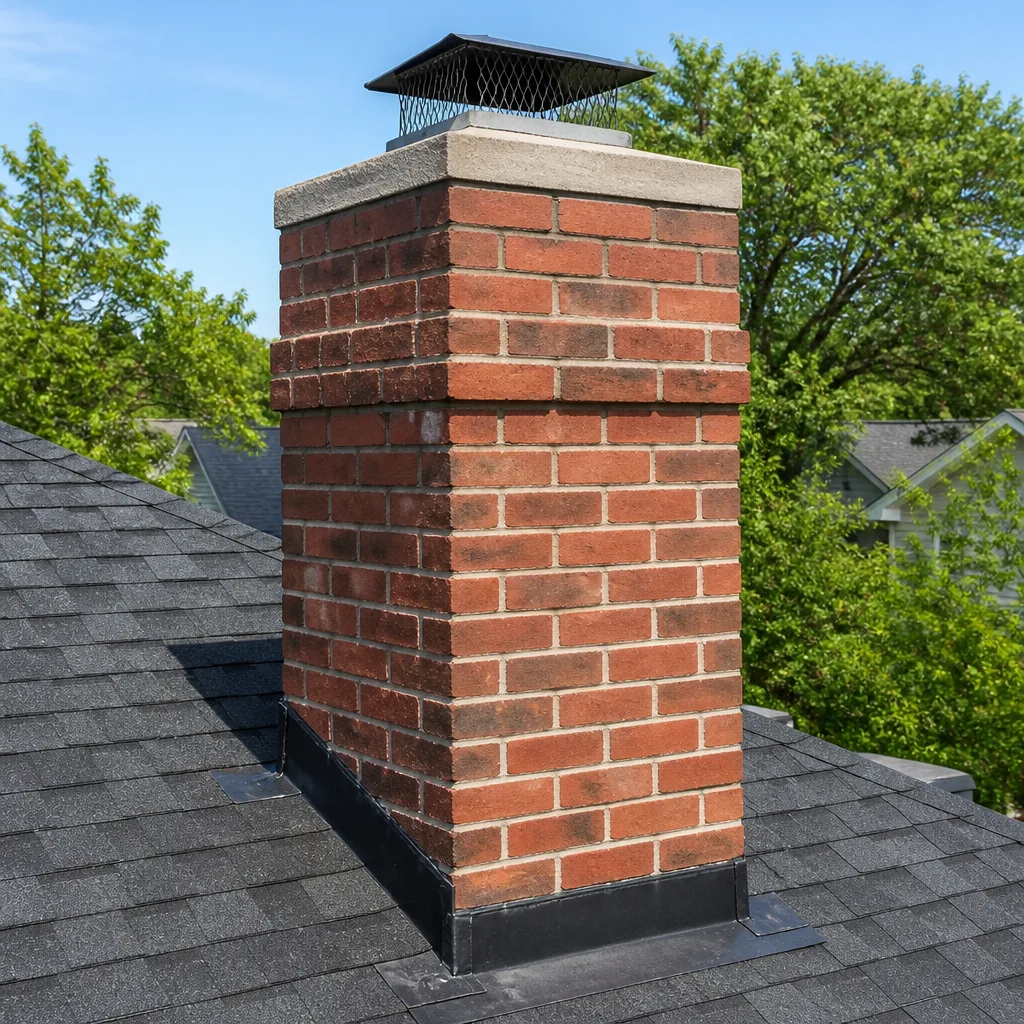 Masonry repair
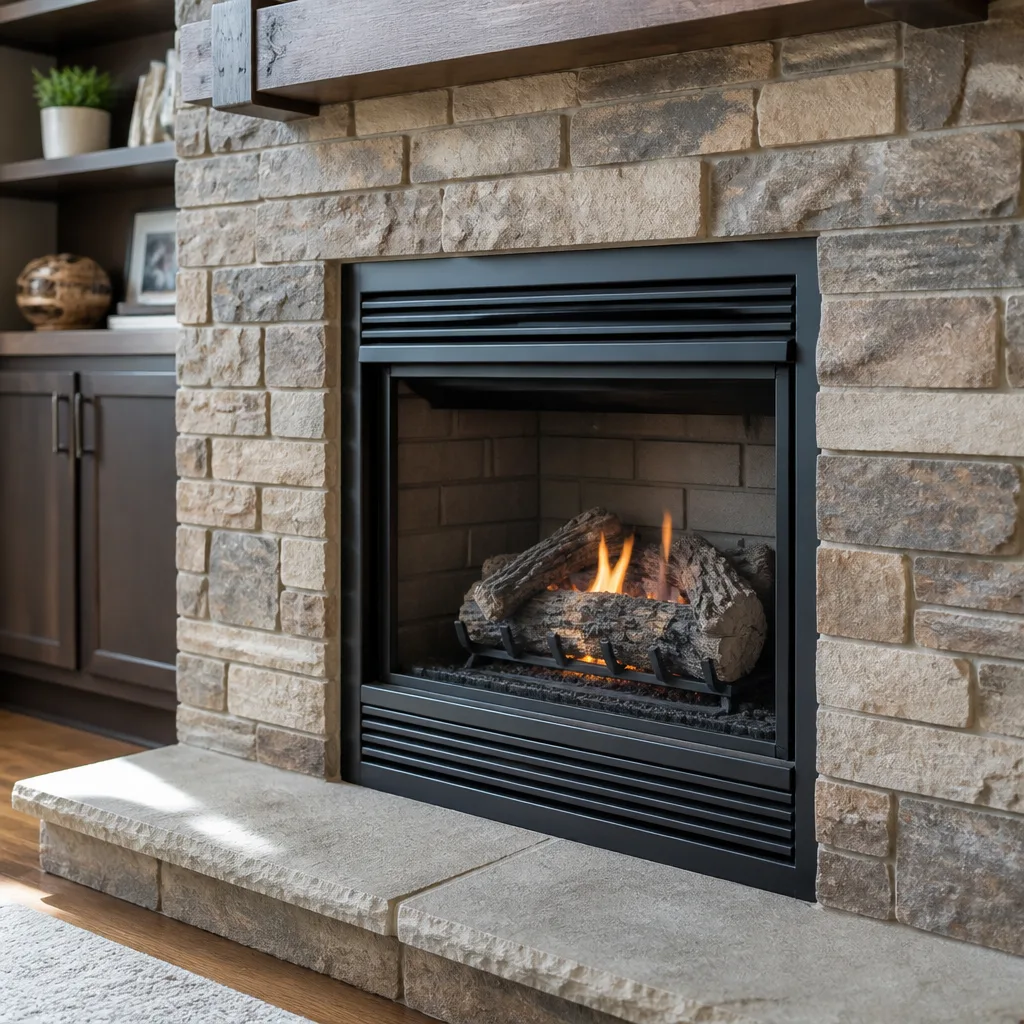 Gas fireplace service
Level 1 sweep and inspection to the NFPA 211 annual standard - flue, crown, cap, and flashing checked and photographed
Chimney sweep logs do not sweep chimneys. They loosen some creosote - which then falls where a brush and vacuum still have to collect it.
How to Hire a Chimney Cleaning Contractor in Sun Valley: A Step-by-Step Guide
California doesn’t issue a license called “chimney sweep.” That single fact changes how you should hire. Anyone with a vacuum, a brush and a business card can call themselves a chimney professional in Sun Valley, and plenty do. The credentials that actually matter are voluntary, which means the burden of checking falls on you. This guide gives you the exact questions to ask, the certifications worth looking for, the quote red flags that signal a pressure-sell operation, and the insurance details most homeowners never think to verify. By the end you’ll know how to separate a trained chimney specialist from a generalist crew that added sweeping to its menu last spring. It takes about ten minutes of homework and saves you from the wrong hire.
Quick Answer
To hire a chimney cleaning contractor in Sun Valley, verify three things before you book: current CSIA or NFI credentials, active liability insurance you can confirm in writing, and a camera inspection included with the sweep. Ask for a flat price agreed before the visit, get the scope in writing, and be wary of any company that opens with a “free inspection” and closes with an urgent four-figure repair quote. A trained specialist will show you photos of what’s inside your flue and tell you plainly when work can wait.
Styles & brands we work with
- Sweep & inspection
- Caps & crowns
- Flue relining
- Masonry repair
- Gas fireplace service
Table of Contents
- Why There’s No “Chimney Sweep License” in California
- Which Certifications Actually Matter: CSIA and NFI Explained
- Five Questions to Ask Before You Book
- Red Flags in Chimney Quotes
- Why Sun Valley Matters: Housing Stock and Local Codes
- How to Verify Insurance for Chimney Work in California
- What a Professional Sweep and Inspection Looks Like
- Common Mistakes to Avoid
Why There’s No “Chimney Sweep License” in California
California licenses contractors, not chimney sweeps. The Contractors State License Board (CSLB) issues licenses for general and specialty construction work, and chimney sweeping on its own doesn’t fall under a single license class. That gap is the whole problem. A company doing structural chimney repair, crown work or relining should hold a valid CSLB contractor license, because that is construction work. A company that only sweeps and inspects may not need one. So the license question isn’t “are you licensed?” It’s “what exactly are you licensed to do, and which part of this job does your license cover?”
Ask it that way and you’ll learn a lot from the answer. A prepared specialist knows their license classification and can tell you which tasks fall under it. A generalist handyman operation often gets vague, changes the subject, or claims a license number that turns out to belong to a different kind of business. You can look up any CSLB license number yourself on the state board’s website in about a minute. Do it. It’s the cheapest background check available.
The other half of the equation is certification. Since the state doesn’t certify chimney professionals, the trade does it through independent bodies. Those credentials are voluntary, and that’s exactly why they carry weight. Someone who paid for testing and continuing education, and who keeps their certification current, made a deliberate choice to be held to a standard. For a full picture of what a professional sweep actually involves, our chimney sweep page breaks down the process step by step.
Here in Sun Valley, the stakes are practical, not theoretical. A flue that hasn’t been properly checked can accumulate creosote, and creosote is the fuel for chimney fires. We’re not going to dramatize that. It’s simply the reason the trade developed standards in the first place. Hiring to those standards is the whole point of this guide.
Which Certifications Actually Matter: CSIA and NFI Explained
Two credentials come up again and again in chimney work: CSIA and NFI. They’re not the same, and understanding the difference tells you what kind of company you’re talking to.
CSIA: Chimney Safety Institute of America
The CSIA certifies chimney sweeps and chimney sweeps who also inspect. Certification requires passing an exam, and it requires renewal, which means the holder keeps up with current standards rather than coasting on a certificate from fifteen years ago. A CSIA-certified sweep has been tested on how chimneys work, how they fail, and how to clean and inspect them without causing damage. When a company advertises CSIA certification, ask whether the individual technician arriving at your home is certified, not just the business owner. Certifications attach to people.
NFI: National Fireplace Institute
The NFI certifies people who work on hearth appliances: wood stoves, gas fireplaces, pellet stoves and the venting systems that serve them. If your Sun Valley home has a gas fireplace insert or a wood stove rather than a simple open masonry fireplace, NFI certification on the technician’s part matters. It shows they’ve been tested on installation and service of that specific equipment, not just the flue above it.
In practice, the strongest chimney companies carry both kinds of credential across their staff, because a modern home’s system runs from the firebox through the flue to the crown at the top. A company that only holds sweeping credentials may hand off fireplace or venting work to someone else. We handle the fireplace and chimney system as one scope, which is why we talk about credentials on both sides of the firebox. If you’re weighing repair options, our fireplace repair page explains what falls inside that scope.
Neither credential is a guarantee of good work. But when you’re choosing between two companies and one can name its certifications and the other can’t, that tells you where to start.
Five Questions to Ask Before You Book
This is the core of the hiring decision. Ask all five, listen to how the answers come back, and you’ll know more about the company than any review page will tell you. Write them down before you call.
- “Do you do a camera inspection, and can I see the footage?” This is the question most homeowners never think to ask, and it’s the most revealing. A trained chimney specialist runs a camera down the flue as part of the inspection and shows you the screen. Companies without inspection equipment will clean what they can reach from the top and leave it at that. If they can’t show you the inside of your flue, they can’t tell you what condition it’s in.
- “Who is CSIA or NFI certified, and will that person be doing my cleaning?” You want the credential to belong to the technician on your roof, not just the business. If the answer is vague, ask again more directly.
- “Is the price flat and agreed before you arrive, or does it change once you’re here?” A flat price you agree to before booking means no surprises. A price that shifts after the technician is already on site is where upselling starts.
- “What does the inspection report include, and do I get it in writing?” A real inspection produces documentation: what was found, photos, and a clear recommendation. Ask to see a sample report before you book. Any company worth hiring will have one ready.
- “If you find a problem, what are my options, and can anything safely wait?” A good specialist answers this honestly, including saying “that can wait until next season” when it can. A pressure-sell operation treats every finding as urgent.
There’s a sixth question worth adding for any job beyond cleaning: “What materials will you use, and can you name them?” A specialist will tell you about professional-trade brands like DuraFlex for flexible liner systems or HeatShield for ceramic resurfacing, and explain why the material suits your flue. A generalist will say “standard liner” and move on. We work with the materials professional chimney technicians specify, sourced through trade distributors like Olympia Chimney and Copperfield, not what’s on the shelf at the hardware store.
Red Flags in Chimney Quotes
Most chimney complaints don’t start with bad cleaning. They start with a quote that turned into a sales pitch. Here’s what to watch for.
- “Free inspection” that ends in a hard sell. A free inspection is a marketing device, and there’s nothing wrong with that on its own, but watch how it’s used. If the inspection costs nothing and the follow-up quote is four figures and urgent, the business model depends on finding work. Ask what the inspection includes, whether the camera footage is yours to keep, and whether you can take the report elsewhere for a second look.
- Urgency without evidence. “Your chimney is dangerous, we can fix it today” is a phrase to be skeptical of. Genuine hazards exist, and a real specialist will show you why: photos, camera footage, a clear explanation of what they’re seeing. Fear without evidence is the signal.
- A price given over the phone with no questions asked. Chimney work depends on what’s inside the flue. A company that quotes a firm number without asking about your fireplace type, liner, or last cleaning is guessing, and the guess will get revised upward on site.
- No named materials. Any repair quote should name the products being used. “A new liner” isn’t enough. Ask which product and why.
- Pushing a full reline on the first visit. Sometimes a reline is genuinely needed. But resurfacing options exist for some deteriorated liners, and the right answer depends on the flue. A specialist lays out the choices. A sales operation leads with the most expensive one.
- No written estimate before work begins. The written estimate sets the final price. If you haven’t seen one, you haven’t agreed to the job.
- Reluctance to put anything in writing. This covers the estimate, the warranty terms on products, and the inspection report. A confident company documents its work.
Why Sun Valley Matters: Housing Stock and Local Codes
Hiring locally isn’t about geography for its own sake. It’s about whether the person on your roof has seen your kind of chimney before.
Sun Valley’s housing is a mix. There are older single-family homes with original masonry fireplaces and decades of use behind them, mid-century homes where fireplaces were built with liners that have since aged, and newer construction and remodels where inserts or modern venting systems have replaced the original setup. Each of those needs a different approach. A masonry fireplace with a badly deteriorated flue is a candidate for HeatShield ceramic resurfacing if the structure allows it, which restores the liner without a full reline. An older home with an offset flue might need a flexible liner system like DuraFlex to line it correctly. A newer insert needs someone who understands the venting that serves it.
Local fire code matters too. Los Angeles County and the surrounding cities have their own requirements for fireplace and chimney installations, and the codes have tightened in recent years, particularly around wood-burning appliances and the venting that serves them. A local contractor works with those requirements routinely and knows what an inspector will look for. A crew from two counties over may not. When you’re choosing who does repair work, not just cleaning, local familiarity is worth something real.
Then there’s the practical side of being in the San Fernando Valley. Our warm, dry climate matters less for chimney wear than for what collects inside it. A chimney that goes unused for most of the year can end up hosting birds, squirrels or wasp nests, which is one reason a chimney cap & crown matters here. The cap keeps animals and debris out between burns. The crown at the top sheds water away from the masonry. Both are small fixes that prevent structural repairs down the road, and a local specialist will check both as a matter of course.
How to Verify Insurance for Chimney Work in California
Insurance is the part of hiring that homeowners skip, and it’s the part that protects you when something goes wrong. Chimney work involves people on your roof, and occasionally structural changes to your home. If a technician is injured on your property or a repair causes damage, you want that company’s insurance to respond, not your homeowner’s policy.
Ask for two things in writing:
- General liability insurance. This covers property damage caused by the work, and it’s the coverage that protects your home. Ask for a certificate of insurance showing current coverage. A legitimate company produces one without hesitation.
- Workers’ compensation insurance. This covers the company’s employees if they’re injured on your property. If a company has no workers’ comp and someone gets hurt on your roof, the situation can come back to you. If the company uses subcontractors, ask whether those subcontractors carry their own coverage.
Don’t just take a verbal assurance. Call the insurance agent listed on the certificate and confirm the policy is active, or ask the company to have their agent send a certificate directly to you. A company that’s properly insured won’t mind. One that gets defensive is telling you something.
There’s a related question worth asking: does the company handle its core work in-house, or does it subcontract the repair side? When a generalist outfit quotes a crown repair or a reline, the work often goes to a third party, and the insurance and quality question gets murkier. We handle the full system from firebox to crown without subcontracting the core work, so the company quoting is the company responsible. That’s a structural difference, and it’s worth asking about with any contractor you’re considering.
What a Professional Sweep and Inspection Looks Like
Knowing what a good visit looks like helps you judge the one you get. Here’s the shape of a professional sweep and inspection on a typical Sun Valley home.
- Before the visit: you’re given a flat price for the sweep, agreed in advance, and told what the inspection includes. You know whether a camera inspection is part of the service and what you’ll receive afterward.
- On arrival: the technician protects your floors and hearth area, checks access to the roof and the firebox, and confirms what you’ve been quoted.
- The sweep: the flue is brushed with the right tools for its shape and material, and the debris is removed. For an open masonry fireplace, this includes the smoke chamber, damper area and firebox, not just the straight run of the flue.
- The inspection: a camera run down the flue shows the liner’s condition, any cracks or gaps, and any buildup. The technician shows you the footage. This is where you see, rather than take on faith, what the flue actually needs.
- The report: you get a written summary with photos, findings and recommendations. Each recommended item should be tied to something visible in the report.
- The conversation: the technician talks you through what can wait and what shouldn’t. A deteriorated crown or a missing cap goes on the list of things worth doing soon. A small crack in a firebox brick might be a next-season item.
What you shouldn’t see: a quote for thousands of dollars of liner work with no photographic evidence, or a recommendation you can’t connect to what the camera showed. The job of a good specialist is to show you the condition of your chimney and let you decide. Our technicians have up to 13 years of experience and work within that approach on every visit. You can start with a Chimney Sweep Sun Valley sweep and inspection and go from there.
Common Mistakes to Avoid
- Booking on price alone. The cheapest sweep in Sun Valley is sometimes a loss-leader that turns into an expensive upsell once the technician is at your door. A fair price with a flat quote and a real inspection is worth more than a low number with an open end. Ask what’s included before you compare.
- Skipping the insurance check. A handwritten name and a phone number is not proof of insurance. Ask for the certificate, and confirm the policy is current with the agent listed on it. It takes five minutes.
- Accepting a repair quote with no camera evidence. You should be able to see what the technician sees before you agree to a repair. If you can’t, ask for the footage. A company that won’t show you is telling you something about how it operates.
- Assuming a general handyman can do the job. Sweeping and inspecting a chimney is a specific trade with its own tools and standards. A crew that added chimney work to a menu of other services may clean what it can reach and call it a sweep. Ask what certifications the technician holds.
- Letting the cap and crown slide. These two components are the most common points of water intrusion on a chimney, and water is what turns a small chimney problem into a structural one. If the technician flags a cracked crown or a missing cap, add it to the list. Small fixes prevent big ones.
- Not asking what happens after the visit. Get the inspection report in writing, with photos. That report is your record. It’s what you compare against next year, and it’s what you’d share with another contractor if you ever wanted a second opinion.
- Waiting until there’s a problem. Clearing creosote and checking the flue is routine upkeep. Chimneys that get checked on a regular schedule are the ones where small issues get caught before they get expensive. Think of it as one item on the yearly home-maintenance list, like changing the filters.
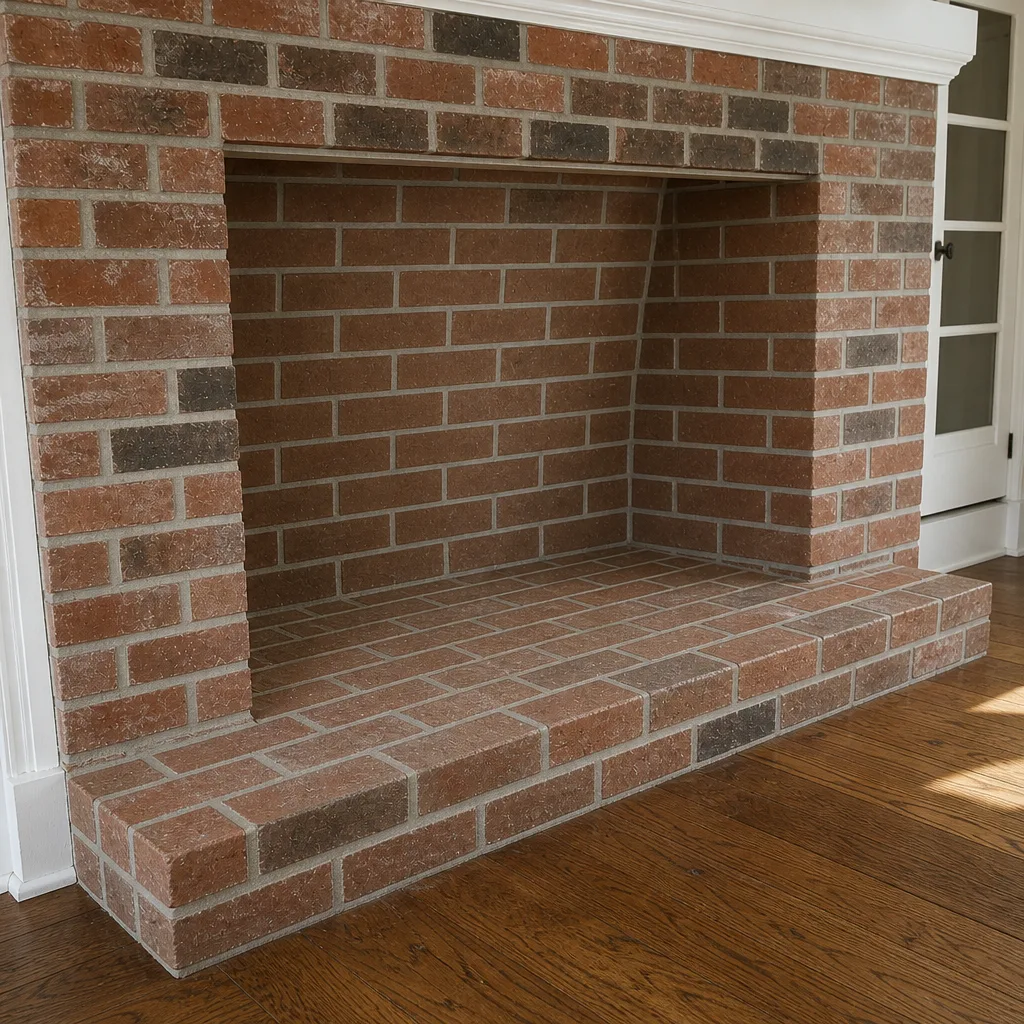
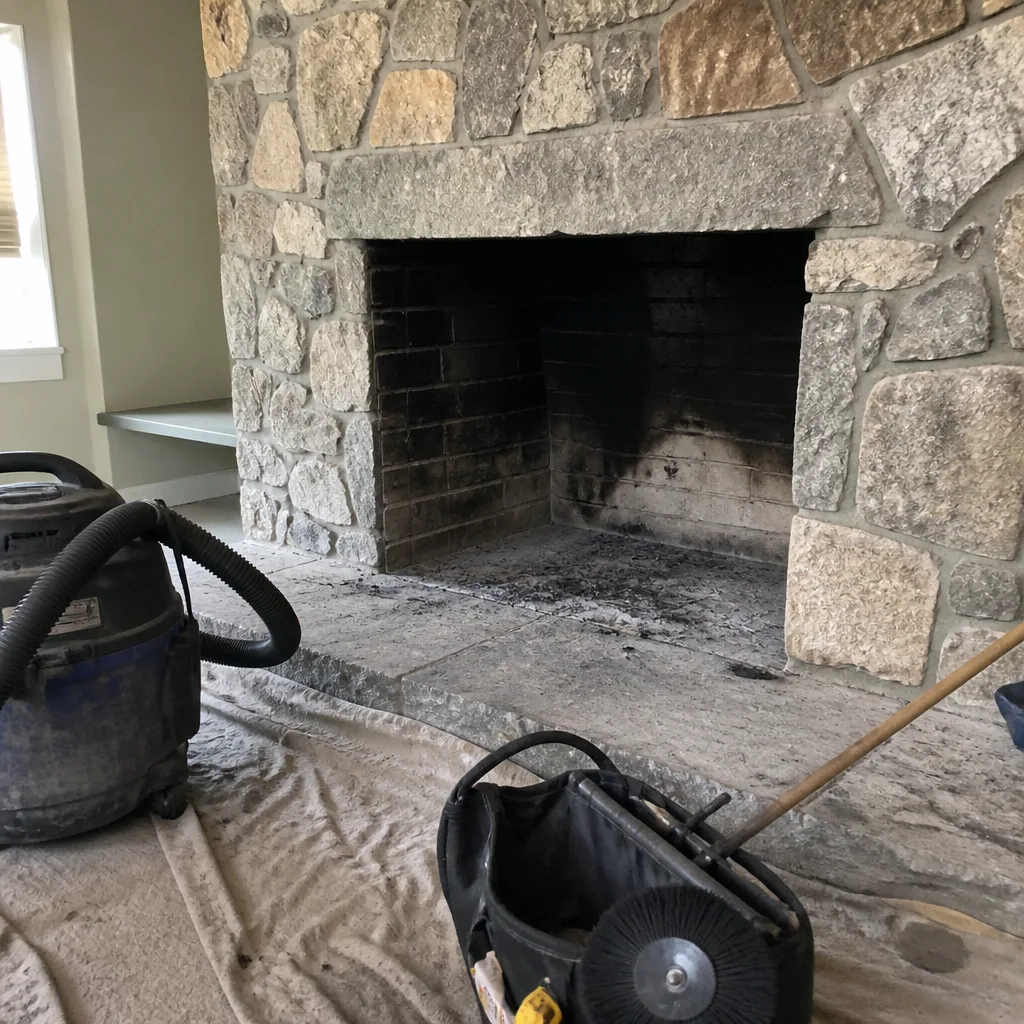
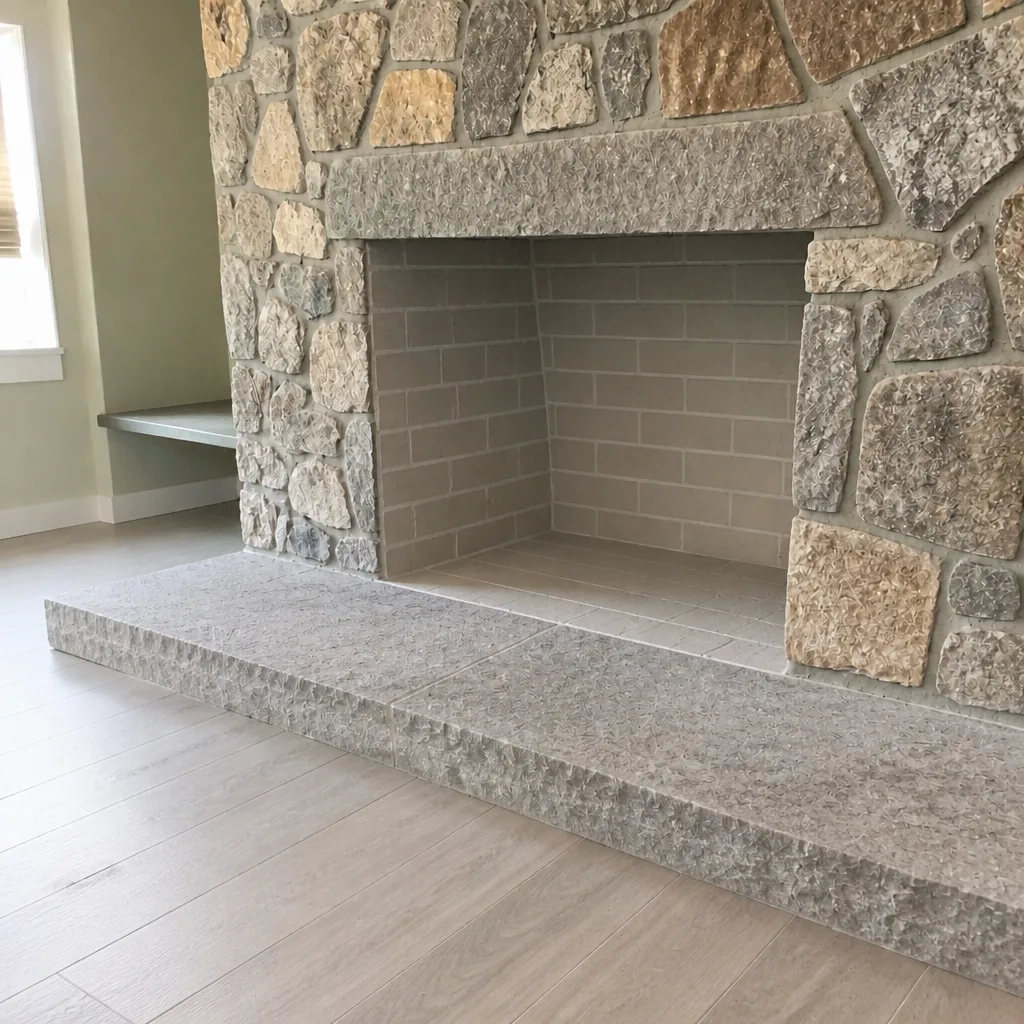
See the difference
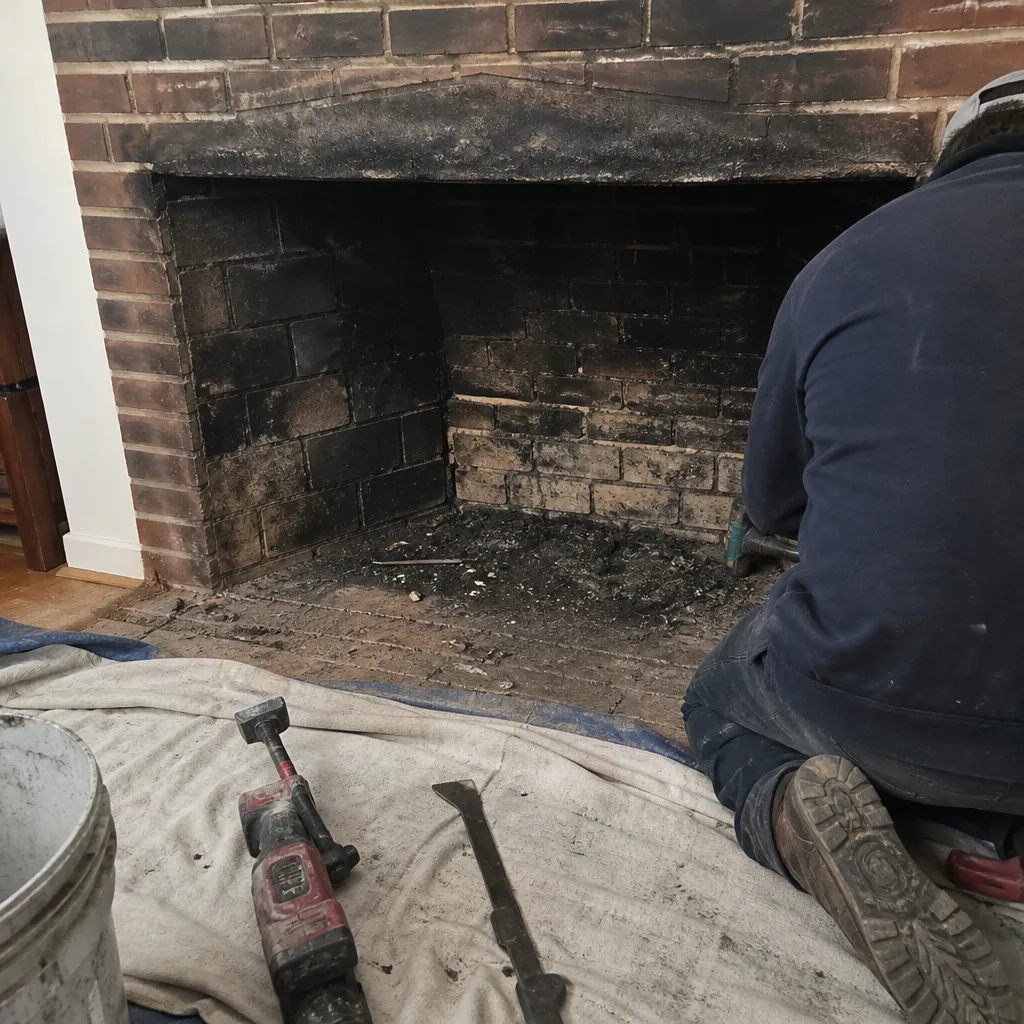 Before
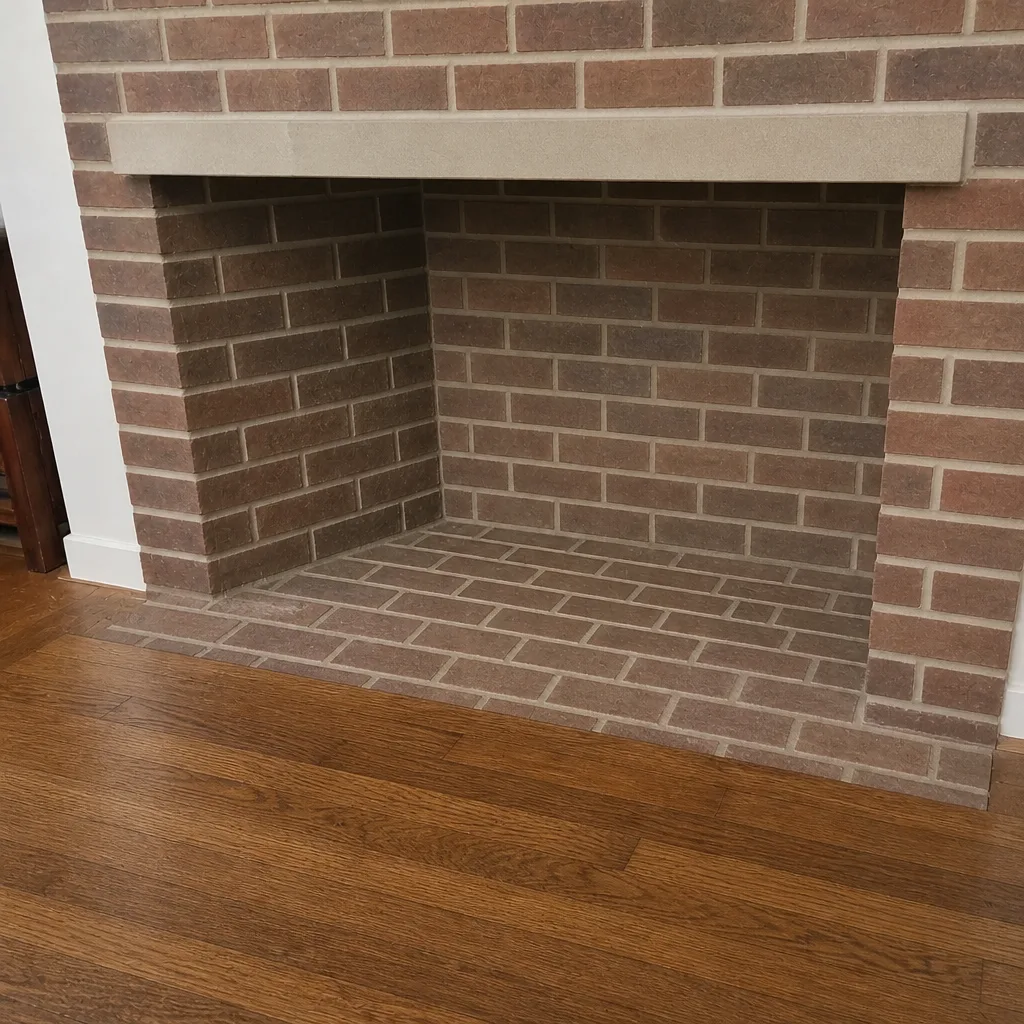 After
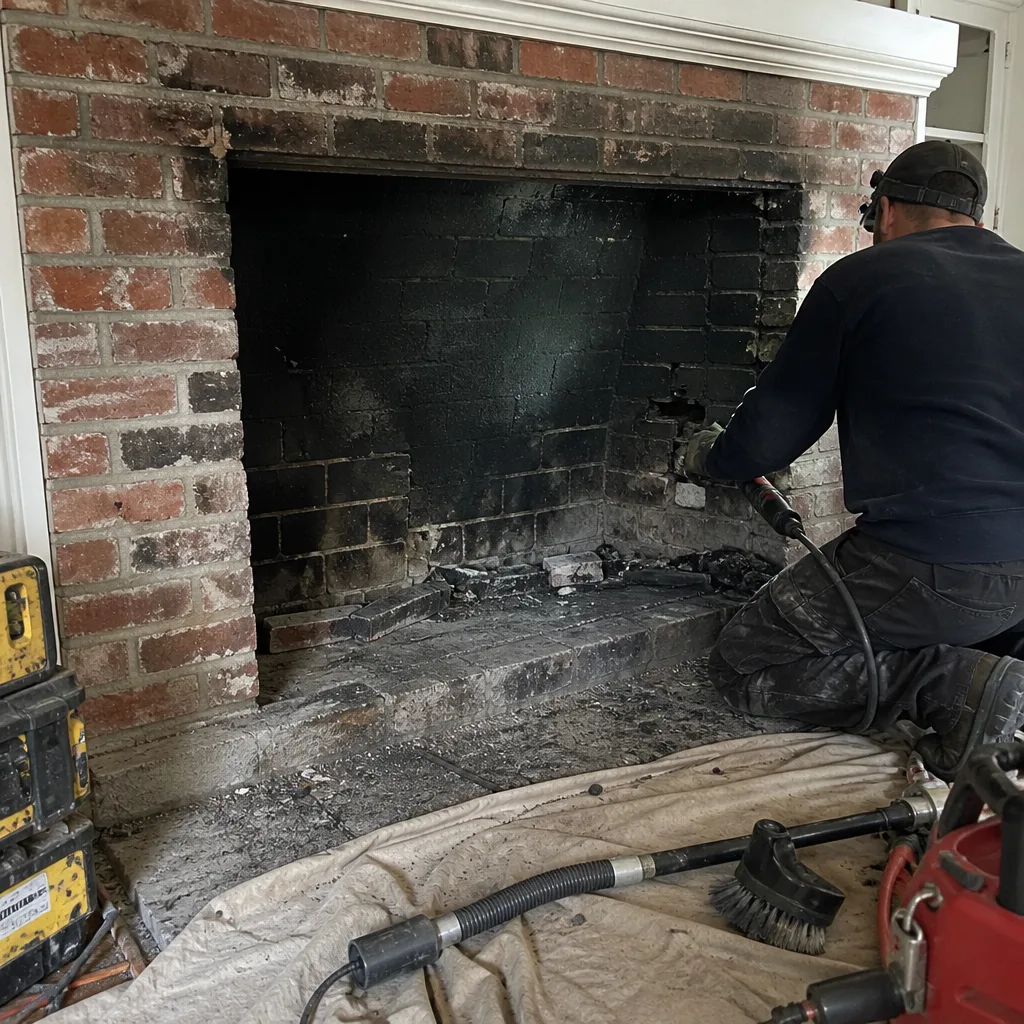 Before
 After
 Before
 After
When to Call a Professional
Some chimney situations call for a professional without delay. If you’ve never had your flue checked and you burn regularly, book a sweep and inspection. If you smell a strong smoky or creosote odor in the living room, if the fireplace draws poorly or smoke backs into the room, or if you can see cracked bricks or missing mortar in the firebox, get someone qualified to look. Any sign of water getting in, like staining on the ceiling near the chimney or crumbling masonry at the top, is worth a look too. None of these mean an emergency, but they all mean it’s time.
Chimney Sweep Sun Valley offers free estimates in Sun Valley. Call (855) 710-2744. We answer 24/7. Fast dispatch from 7am to 7pm, Sunday through Friday. The estimate is free and the price is set per job by the written estimate, so you’ll know what’s being done and what it costs before anything starts.
Frequently Asked Questions
California doesn’t issue a specific license for chimney sweeping, so there’s no separate “chimney sweep license” to look for. What you should check is whether the company holds a valid CSLB contractor license for any structural work like crown repair or relining, and whether its technicians carry current CSIA or NFI certification. Ask to see the CSLB number and look it up on the state board’s website, then ask which technician is certified and whether that person will be on the job. Call (855) 710-2744 for a free estimate.
CSIA and NFI are the two worth checking. CSIA certification covers sweeping and inspection and requires an exam and renewal, so the holder stays current with standards. NFI certification covers hearth appliances like wood stoves, gas fireplaces and their venting. Ideally, the people working on your chimney hold credentials that match the system you have. Ask who is certified, whether the certification is current, and whether that person does the work.
Ask for a certificate of insurance in writing showing general liability and workers’ compensation coverage, then confirm it with the agent listed on the certificate. General liability covers damage to your property; workers’ comp covers injuries to the company’s employees on your property. A properly insured company provides the certificate without hesitation. If the company subcontracts repair work, ask whether those subcontractors carry their own coverage, since the insurance question follows whoever is actually on your roof.
A chimney sweep in Sun Valley is typically priced as a flat rate agreed before the visit, with the inspection included. Without seeing your fireplace type, liner and last cleaning date, nobody can give a firm number over the phone. The written estimate sets the final price, and the estimate is free. Call (855) 710-2744 for an exact quote. Estimates are free, and we answer 24/7.
A free inspection is a marketing offer, and it can be legitimate, but watch how it’s used. If the inspection costs nothing and the follow-up quote is urgent and expensive with no photographic evidence, the business model depends on finding work. Ask in advance what the inspection includes, whether it uses a camera, and whether you get the report and footage to keep. If you can take that report elsewhere for a second opinion, the inspection is serving you, not just the sale.
A local contractor has seen how Sun Valley’s housing stock is built: older masonry fireplaces, mid-century homes with aged liners, and newer inserts with their own venting needs. They also work routinely with local fire code requirements for chimney and fireplace work, which a crew from another area may not know. And they’ll flag the local details that matter here, like caps and crowns that keep birds, debris and rain out of a chimney that sits unused through the warm, dry months.
Ask to see the camera footage first. A full reline is sometimes the right answer, but not always; HeatShield ceramic resurfacing is an option for some deteriorated liners and can restore the flue without a full reline when the structure allows it. Get the recommendation in writing with photos, ask what the alternatives are, and take the report for a second opinion if you want one. Call (855) 710-2744 for a free estimate and a look at what your flue actually needs.
The Bottom Line
Hiring a chimney contractor in Sun Valley comes down to three checks and five questions. Check CSLB licensing for the structural work, check CSIA or NFI certification on the technician who’ll do the job, and check insurance in writing with the agent. Then ask about camera inspection equipment, who does the work, whether the price is flat, what the report includes, and whether anything can safely wait. Any company that answers those honestly is one you can hire. Our technicians have up to 13 years of experience, we handle the full system from firebox to crown, and we work with the trade materials professional chimney technicians specify. The written estimate sets the final price, and the estimate is free.
Ready to book a sweep and inspection, or just want to talk through what your chimney needs? Call (855) 710-2744 for a free estimate. We answer 24/7. Fast dispatch from 7am to 7pm, Sunday through Friday.
Written by the team at Chimney Sweep Sun Valley.