
Last updated November 22, 2026
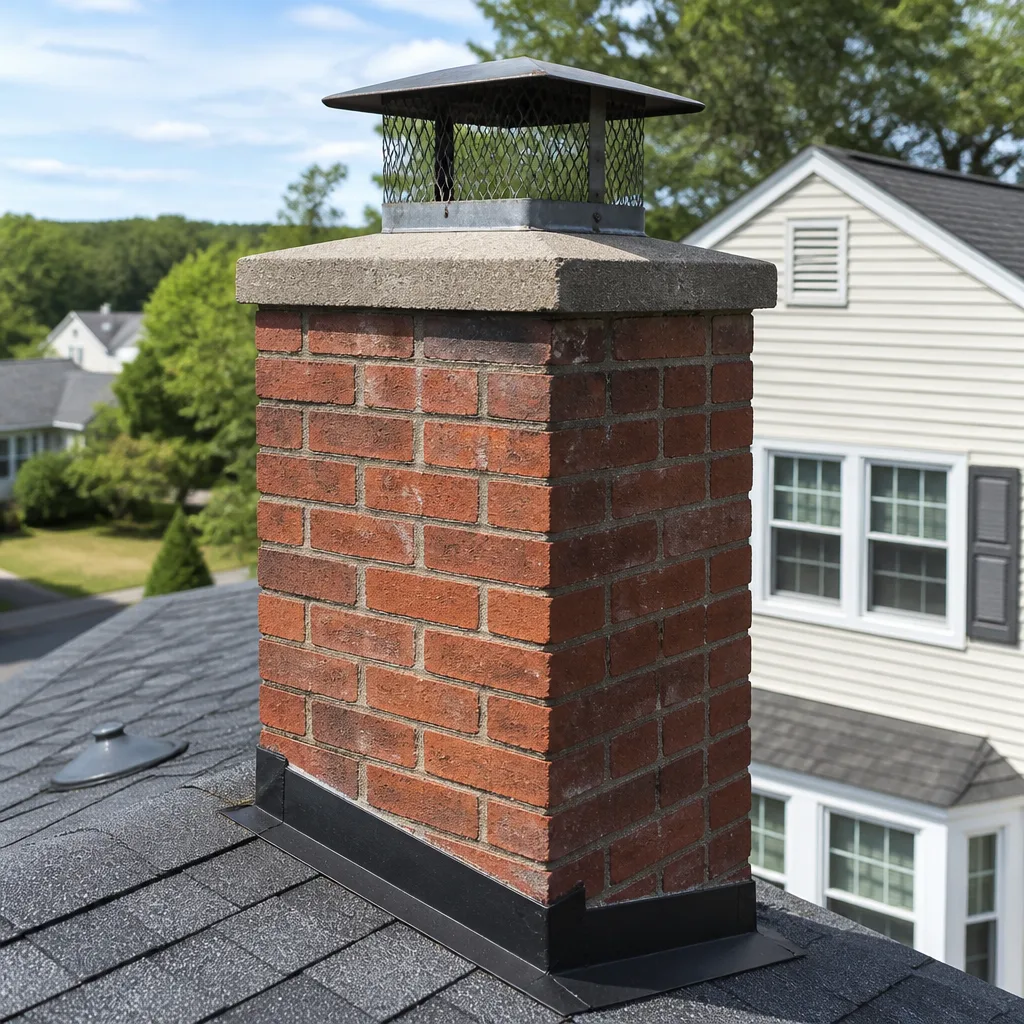 Sweep & inspection
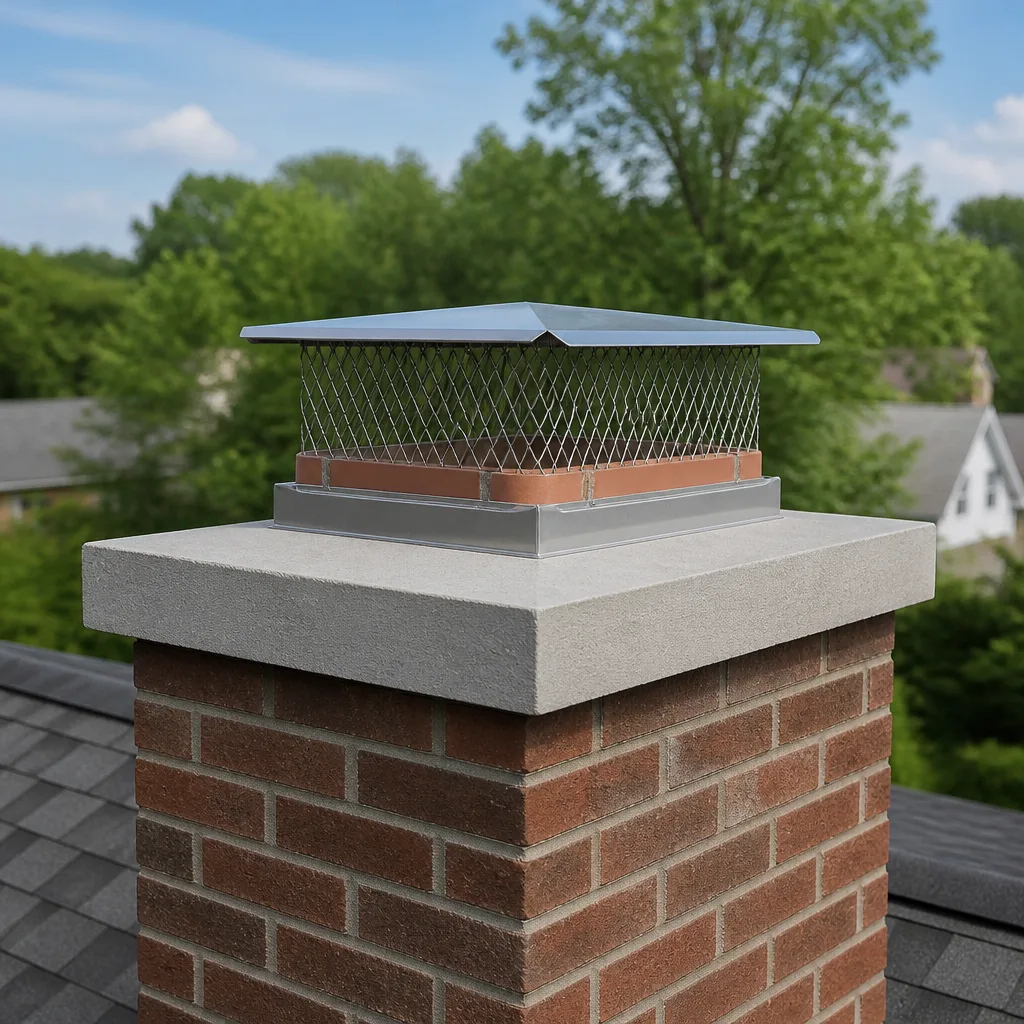 Caps & crowns
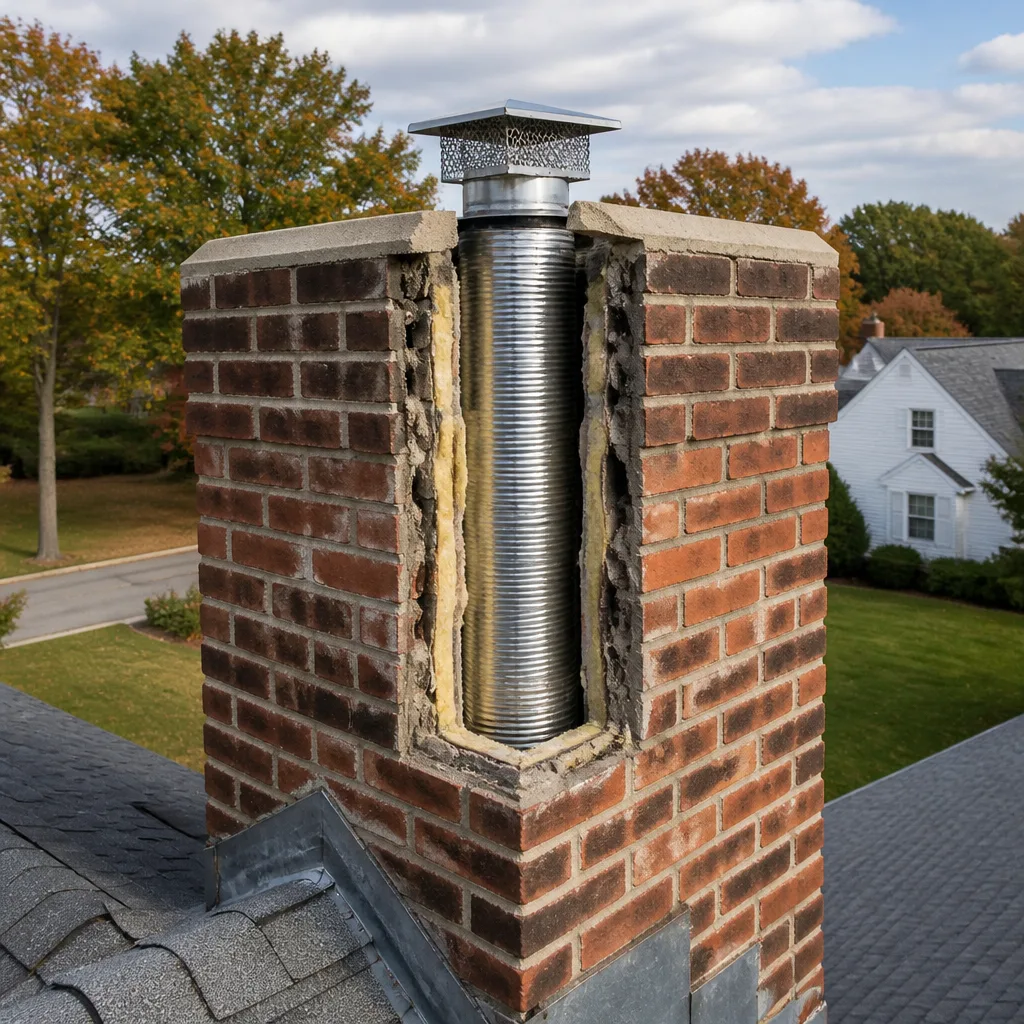 Flue relining
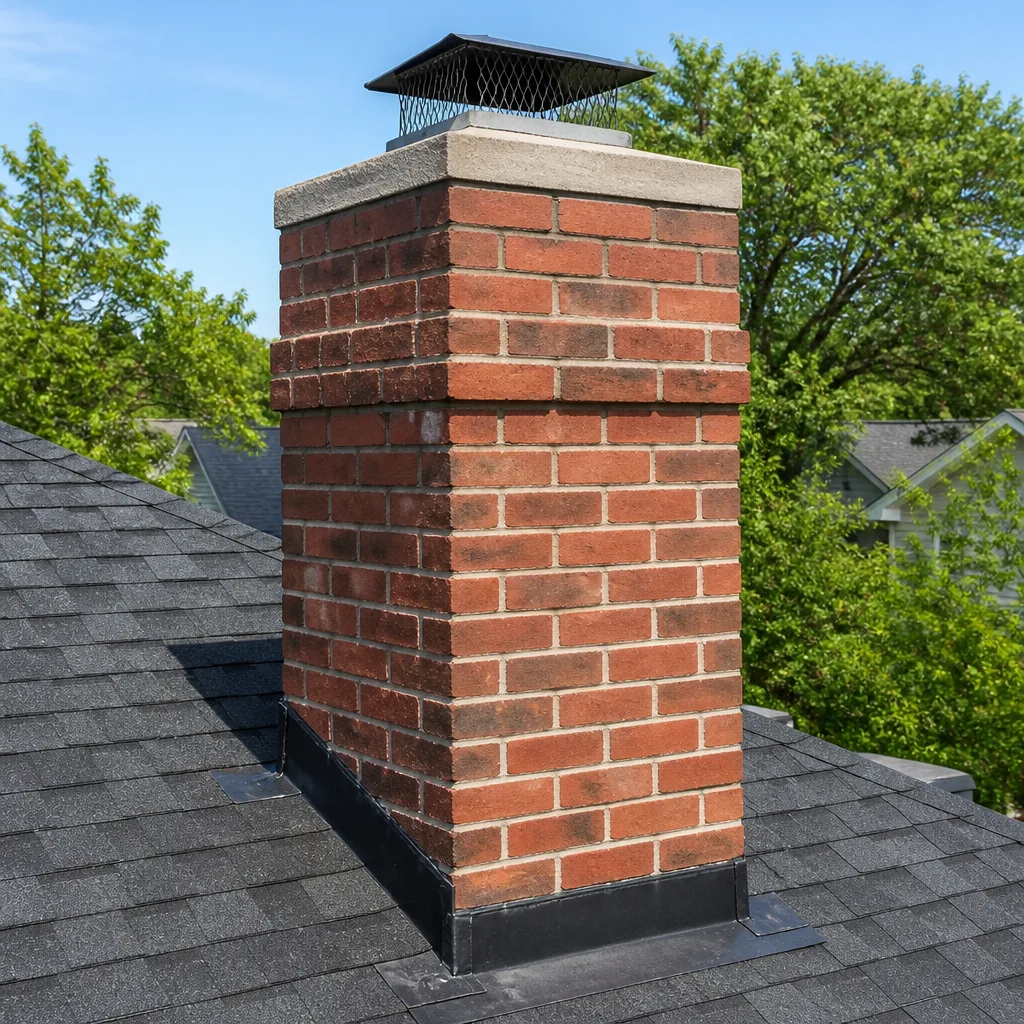 Masonry repair
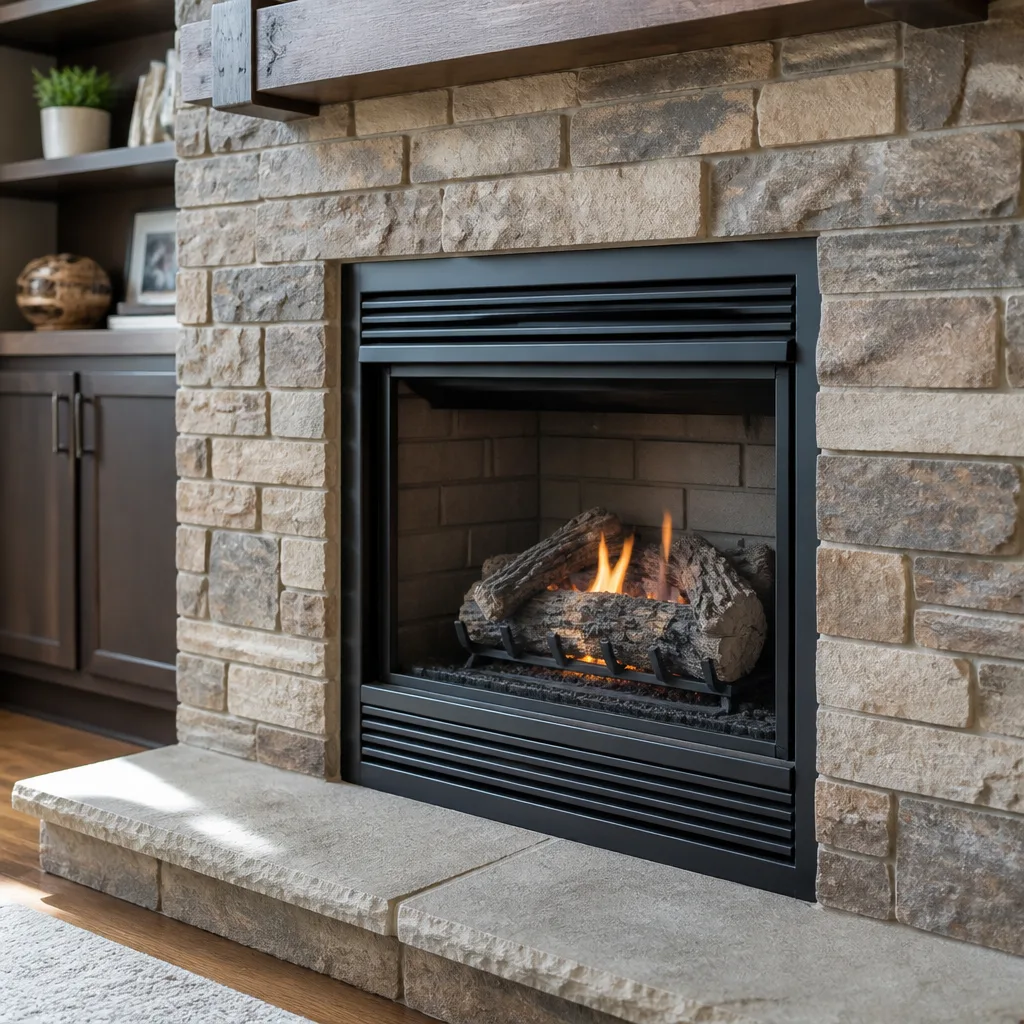 Gas fireplace service
Level 1 sweep and inspection to the NFPA 211 annual standard - flue, crown, cap, and flashing checked and photographed
Chimney sweep logs do not sweep chimneys. They loosen some creosote - which then falls where a brush and vacuum still have to collect it.
Chimney Cleaning Emergency Preparedness Guide for Sun Valley Homes
Most homeowners think of a chimney fire as a house problem. In Sun Valley, it’s rarely that contained. When the Santa Ana winds are pushing through the valley and the hills above us are tinder-dry, a chimney fire that throws sparks onto a shake roof or a dry hillside becomes a neighborhood problem in minutes. The same is true after a seismic event or a nearby wildfire. The first ten minutes after you notice something wrong are the ones that decide how the next ten months go. This guide walks through what to do in those minutes, how to assess your chimney after an earthquake or a fire, and how to build a documentation file that holds up when your insurance adjuster asks questions.
Quick Answer
If you suspect a chimney fire, stop using the fireplace, close the damper and glass doors, get everyone out of the house, and call 911 from outside. After an earthquake or a nearby wildfire, treat a visually intact chimney as unusable until a trained professional inspects it, because heat and ground movement can compromise the flue without any visible sign. Keep a chimney emergency file with inspection reports, photos and material records where you can grab it fast. Chimney Sweep Sun Valley offers free estimates and a full inspection that documents your system before an emergency ever happens.
Styles & brands we work with
- Sweep & inspection
- Caps & crowns
- Flue relining
- Masonry repair
- Gas fireplace service
Table of Contents
- What to Do in the First Ten Minutes of a Suspected Chimney Fire
- Post-Earthquake Chimney Protocol for Sun Valley Homes
- Assessing Your Chimney After a Nearby Wildfire
- What to Tell the Fire Department and Your Insurance Adjuster
- Building a Chimney Emergency File That Protects You
- Building a Preparedness Plan Before the Season Turns
- When to Call a Professional
- Frequently Asked Questions
What to Do in the First Ten Minutes of a Suspected Chimney Fire
A chimney fire doesn’t always look like flames roaring out the top. More often you’ll hear a low rumble like a freight train, see thick black smoke from the flue, notice the stovepipe glowing, or smell a sharp creosote burn. Some chimney fires burn hot enough to be visible; others smolder quietly in a cracked liner. Both are serious.
Here is the correct sequence, and the order matters:
- Stop adding fuel. Don’t open the firebox door to inspect the fire. The surge of oxygen can make a smoldering chimney fire flare. If the fireplace has glass doors, close them. Close the damper only if it’s safe to reach.
- Get everyone outside. Move children and pets out first. Don’t stop to gather belongings. Smoke and carbon monoxide can build faster than you expect.
- Call 911 from outside. Even if you think the fire is out, call. Chimney fires travel into attics and wall cavities, and the fire department can confirm the fire is contained.
- Don’t spray water down the flue. A hot flue hit with cold water can crack or shatter the liner. Leave the extinguishing to the fire department.
- Do not re-light the fireplace. The flue may have a crack you can see only with a camera. Wait for a professional inspection before using the fireplace again.
That’s the sequence. The one thing we’d add: don’t assume you’ll know a chimney fire when you see one. In our experience, homeowners are often surprised to learn that what they thought was a soot smell or a stuck damper was actually the start of a fire. If something feels off after a fire, get it inspected. A failed flue liner doesn’t announce itself.
Post-Earthquake Chimney Protocol for Sun Valley Homes
Sun Valley sits in a seismically active region, and chimney inspection after any noticeable shaking should be automatic. The problem is that most chimneys are designed to survive what the house survives, but not always without damage. A chimney that looks intact from the driveway can have a fractured flue tile, a shifted crown, or a gap where the chimney meets the roof.
Here’s the protocol we recommend to any Sun Valley homeowner who’s felt a quake:
- Get out and look. From outside, check the roofline and the chimney cap. If the chimney leans, if the cap is askew, or if you see debris on the roof, stop here. Call a professional.
- Don’t use the fireplace. Even if nothing looks wrong, the flue interior is the part you can’t see. Hairline cracks in clay tile are common after seismic movement and are a fire hazard.
- Look for indoor clues. Soot streaks above the firebox, fresh cracks in the brick or mortar, or a fireplace door that no longer closes smoothly all point to movement.
- Book an inspection. A camera inspection is the only way to see inside the flue and confirm the liner is intact. This is where chimney sweep work overlaps with inspection: we sweep, then we run a camera and show you what’s there.
We’ve seen enough Sun Valley chimneys to know that visual inspection is a starting point, not an answer. An earthquake can compromise a flue without leaving a mark on the outside. A sweep plus a camera inspection is cheap compared to a house fire.
Assessing Your Chimney After a Nearby Wildfire
When a wildfire burns in the hills above Sun Valley, the plume doesn’t just stay in the hills. Embers, ash and heat travel with the wind. A chimney is one of the few openings into a house that stays open, and it can pull embers in through the cap or burn a wood shingle roof from below. After a nearby fire, here’s what to check:
- Ember intrusion. Check inside the firebox for ash and charring that didn’t come from your last fire. If the firebox interior shows fresh soot patterns or burned debris, an ember entered the flue.
- Heat damage to the crown. The crown is the concrete cap on top of the chimney. Heat can crack it, and a cracked crown lets water into the chimney body. We install crowns as their own service line for exactly this reason.
- Ash loading in the flue. Wind-driven ash can settle inside the flue and restrict draft. A sweep clears it.
- Cap damage. A hot ember or wind-borne debris can damage the cap or screen. If the cap is compromised, the flue is open to wildlife and water until it’s replaced. Our chimney cap & crown service covers both.
Wildfire ash is abrasive and can degrade a liner faster than normal soot. If your home was within a few miles of a burn area and the wind was pushing toward you, a sweep-and-inspect is the right first move. It’s also the step that produces the paper record your insurer will want if there’s later damage.
What to Tell the Fire Department and Your Insurance Adjuster
After any chimney-related incident, the quality of your documentation decides how the claim goes. Fire departments and adjusters ask the same questions: what was the condition before, what happened, and what’s the proof. Your job is to have answers.
What to tell the fire department
- The date and time you first noticed the problem.
- Whether the fire was in the firebox, the flue, or the attic.
- How long the fireplace had been in use and what you were burning.
- Whether you have a chimney cap, and whether it’s intact.
- The name of the last company that inspected or swept the chimney.
What to tell your insurance adjuster
- The last inspection report with the date and findings.
- Photos of the chimney, firebox and cap before the incident.
- The fire department’s incident report number.
- Receipts for any prior chimney work (liner, cap, crown).
- Any contractor estimate for repair, in writing.
This is where most claims get complicated. Without a baseline record, an adjuster can’t tell whether a cracked liner pre-existed the fire or was caused by it. A pre-incident inspection closes that gap. If you haven’t had one, we can perform an inspection and photo report that establishes your chimney’s condition today. That report is the document you’ll reach for later.
Building a Chimney Emergency File That Protects You
A chimney emergency file is a physical folder (or a scanned set of files in your phone) that holds everything you’d need in the first ten minutes. We recommend every Sun Valley homeowner keep one. Here’s what goes in it:
- Last inspection report. Include the date, findings, and a copy of any photos. If you’ve had more than one, keep the latest and the one before it.
- Sweep records. The date of the last sweep and the company that performed it. A sweep log also tells you how fast creosote builds in your system.
- Installation records. If your flue was relined or a cap installed, keep the manufacturer and installer information. If we’ve installed a DuraFlex liner system in your home, that record goes in the file.
- Before photos. Photograph the firebox, the flue opening, the cap and the roofline. Take them from the same angle every year so you can spot changes.
- Contact list. Your chimney professional, your insurance agent, and the local fire department’s non-emergency line.
- A short written note of what to do in the first ten minutes, torn from this guide and taped inside the file.
Keep a paper copy where you can grab it, not in the attic. The smoke detector cabinet in the hallway is a good spot. Scan everything to your phone too.
Building a Preparedness Plan Before the Season Turns
The best time to think about a chimney emergency is not during one. In Sun Valley, the burn season overlaps with the Santa Ana wind months, so the calm weeks before are when the plan should be built. Here’s the sequence we recommend:
- Get a baseline inspection now. A camera inspection tells you exactly what your flue looks like before the first fire of the season. This is the record you’ll rely on if anything goes wrong.
- Schedule the sweep before the wind season. Creosote accumulates faster than most people realize. A sweep is the cheapest insurance against a chimney fire.
- Check your cap and crown. The most common points of water intrusion are the cap and the crown. If either is worn, replace it before the rains come.
- Test your CO and smoke alarms. Put this on the same day you schedule the chimney work. A chimney fire or a flue crack can introduce carbon monoxide into the house.
- Know your flash point. If your chimney has a crack, a glazed creosote load, or a damaged cap, write the “do not burn” date on the firebox and don’t light a fire until it’s resolved.
- Share the plan. Make sure everyone in the household knows the first-ten-minutes sequence, including where the emergency file lives.
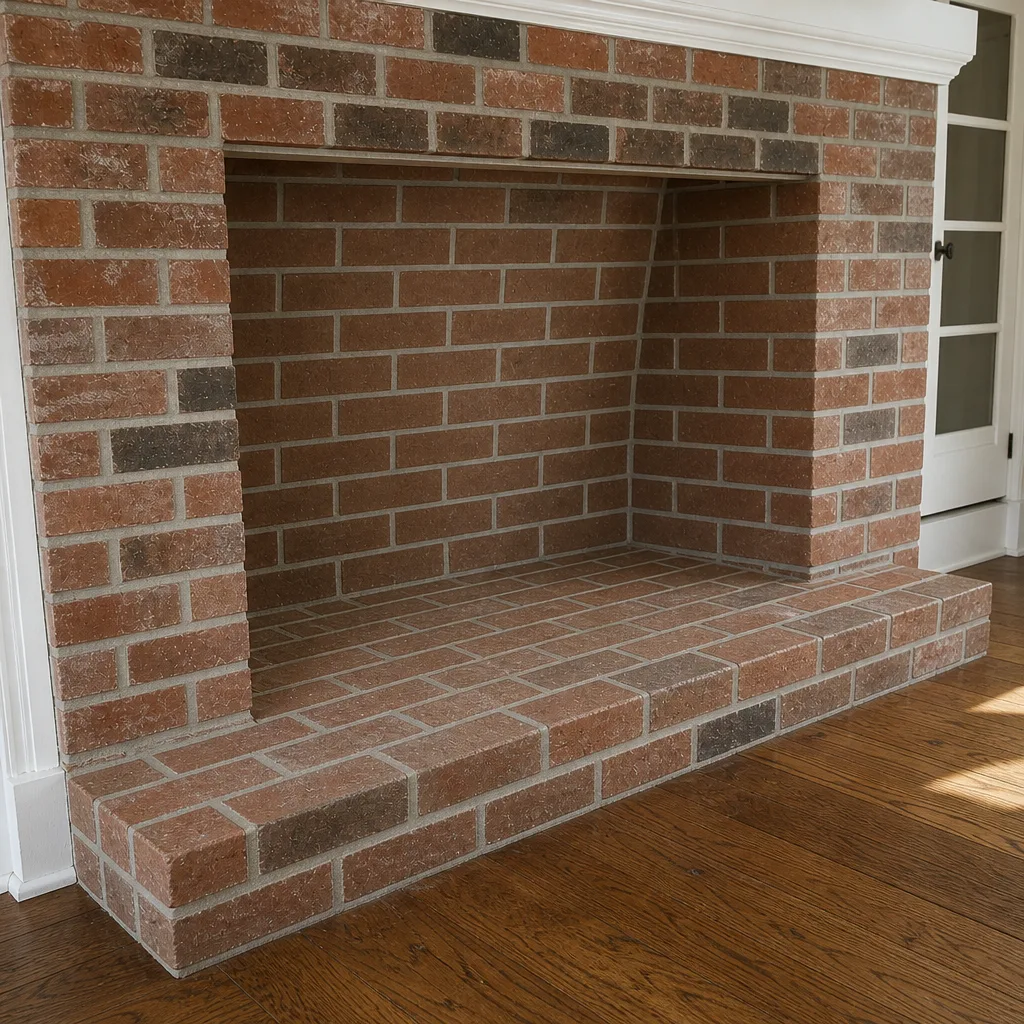
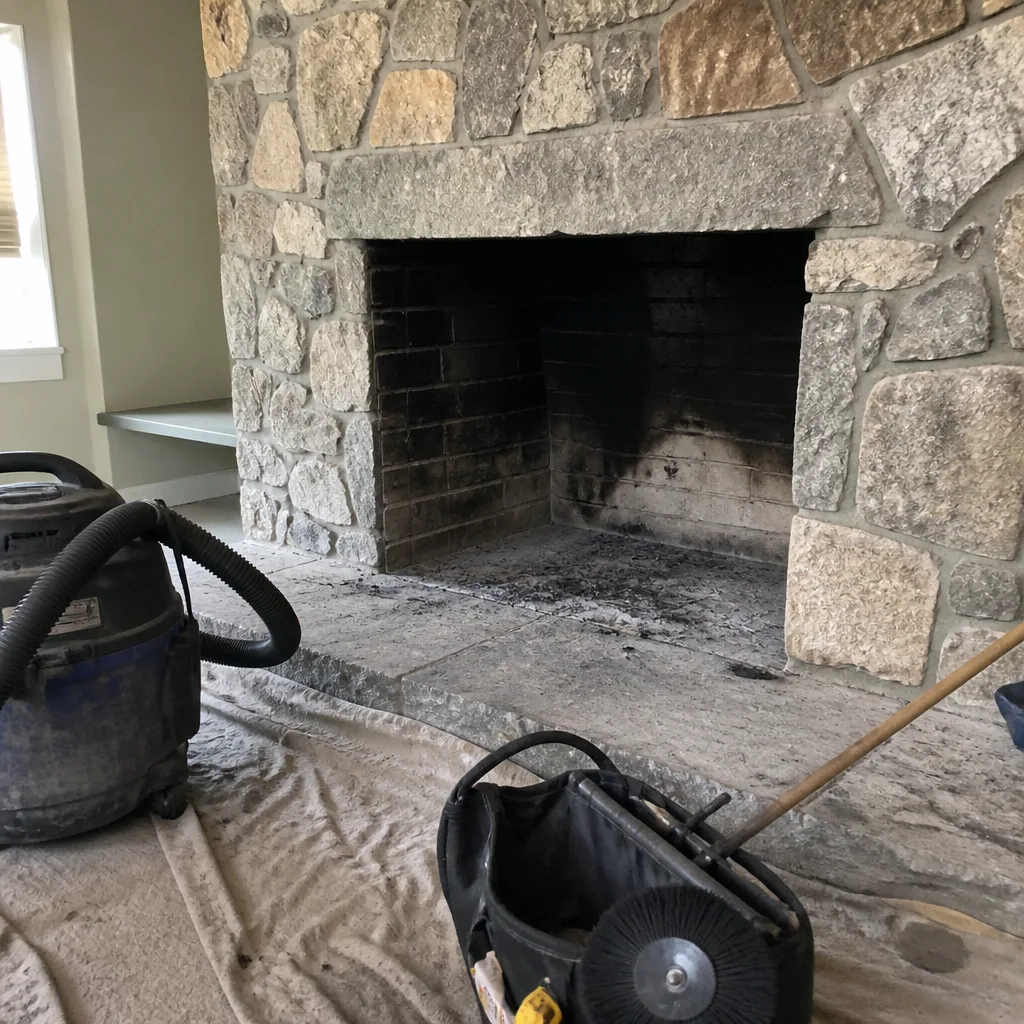
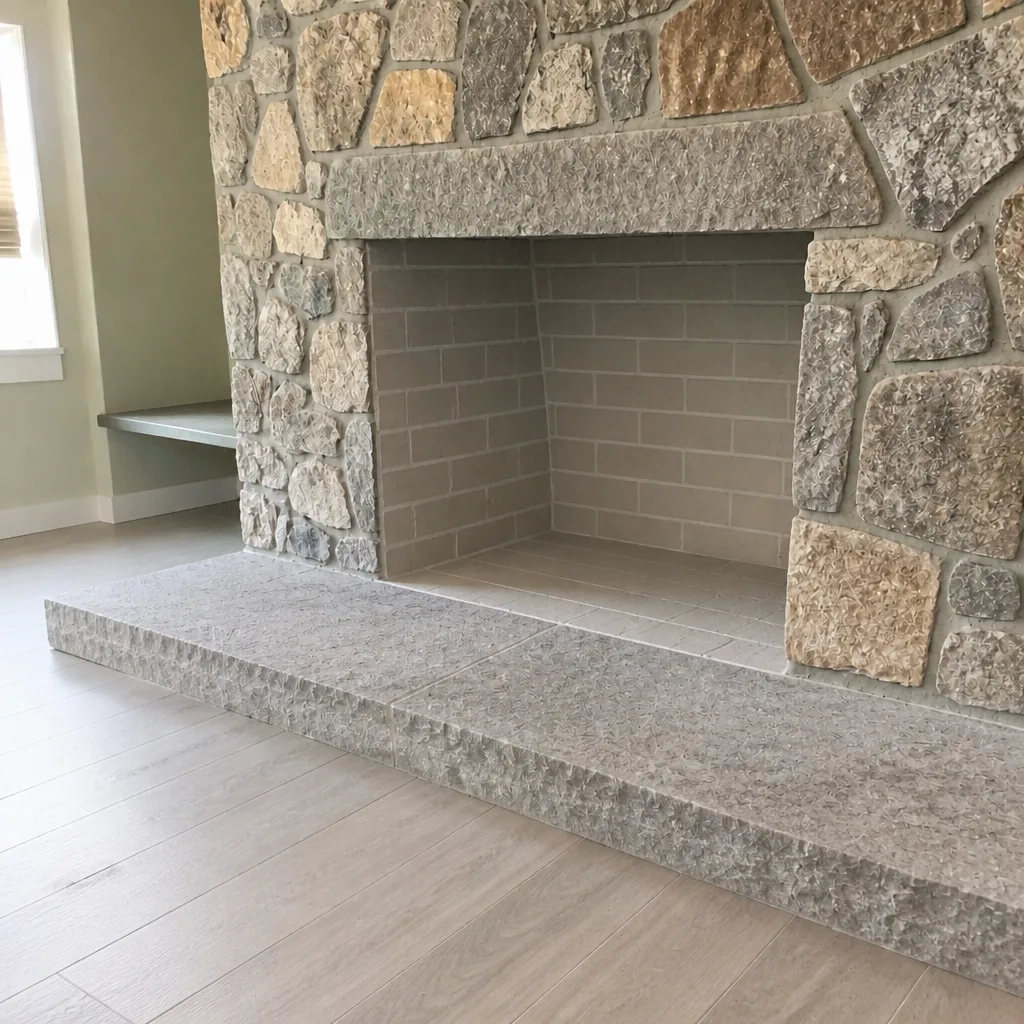
If you’re rebuilding any part of the chimney system, we work with a curated roster of professional-trade brands: DuraFlex for flexible liner systems, fireplace repair materials from the trade supply houses, and HeatShield ceramic resurfacing when a liner can be restored rather than replaced. HeatShield is the repair-rather-than-replace path we use when the flue structure allows it. That’s a real cost saving when it applies, and we tell you plainly when it doesn’t.
See the difference
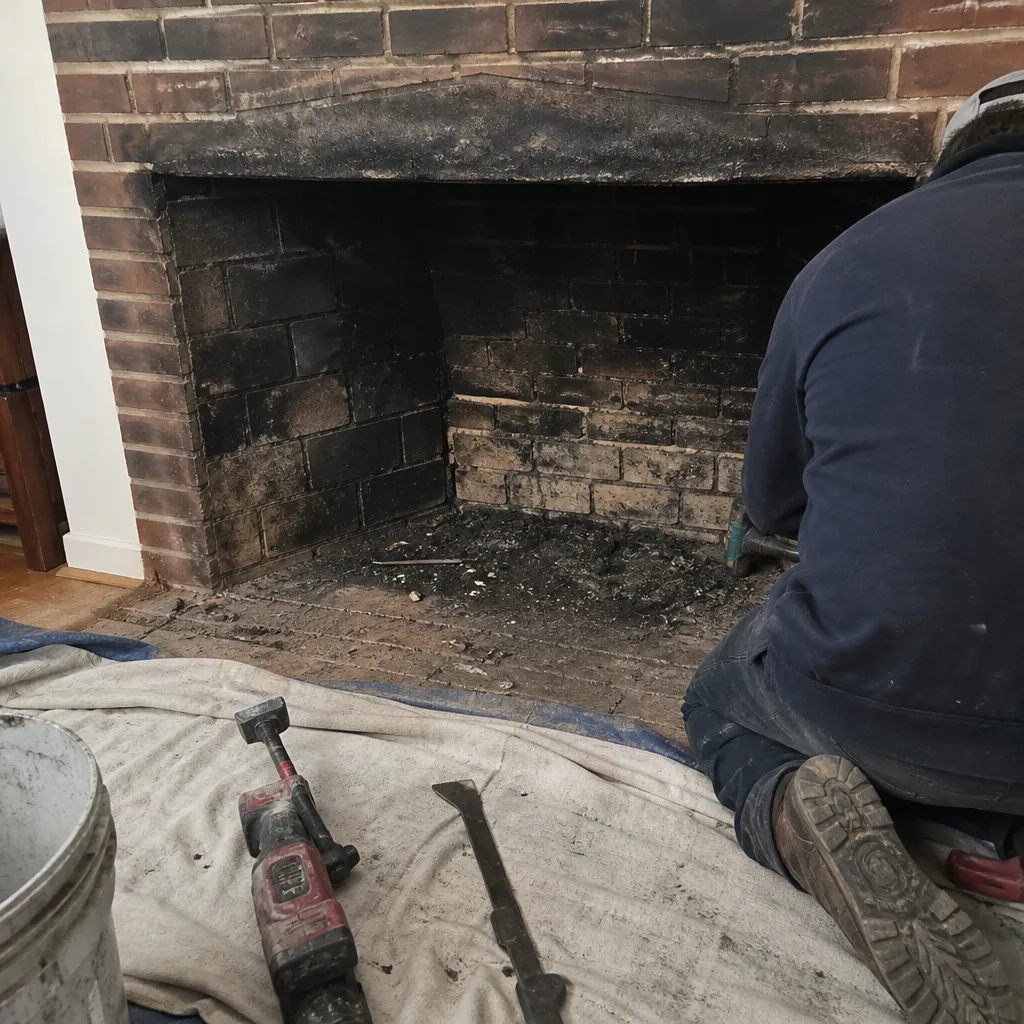 Before
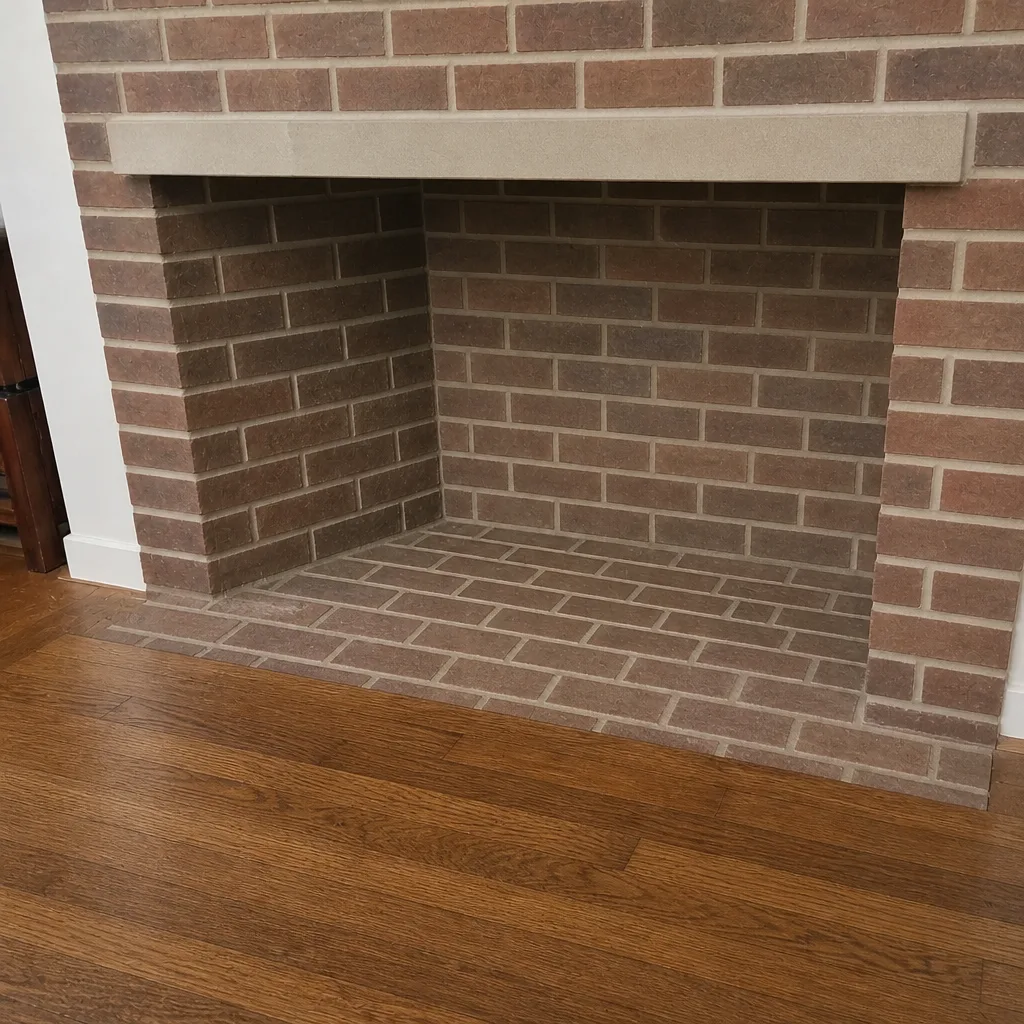 After
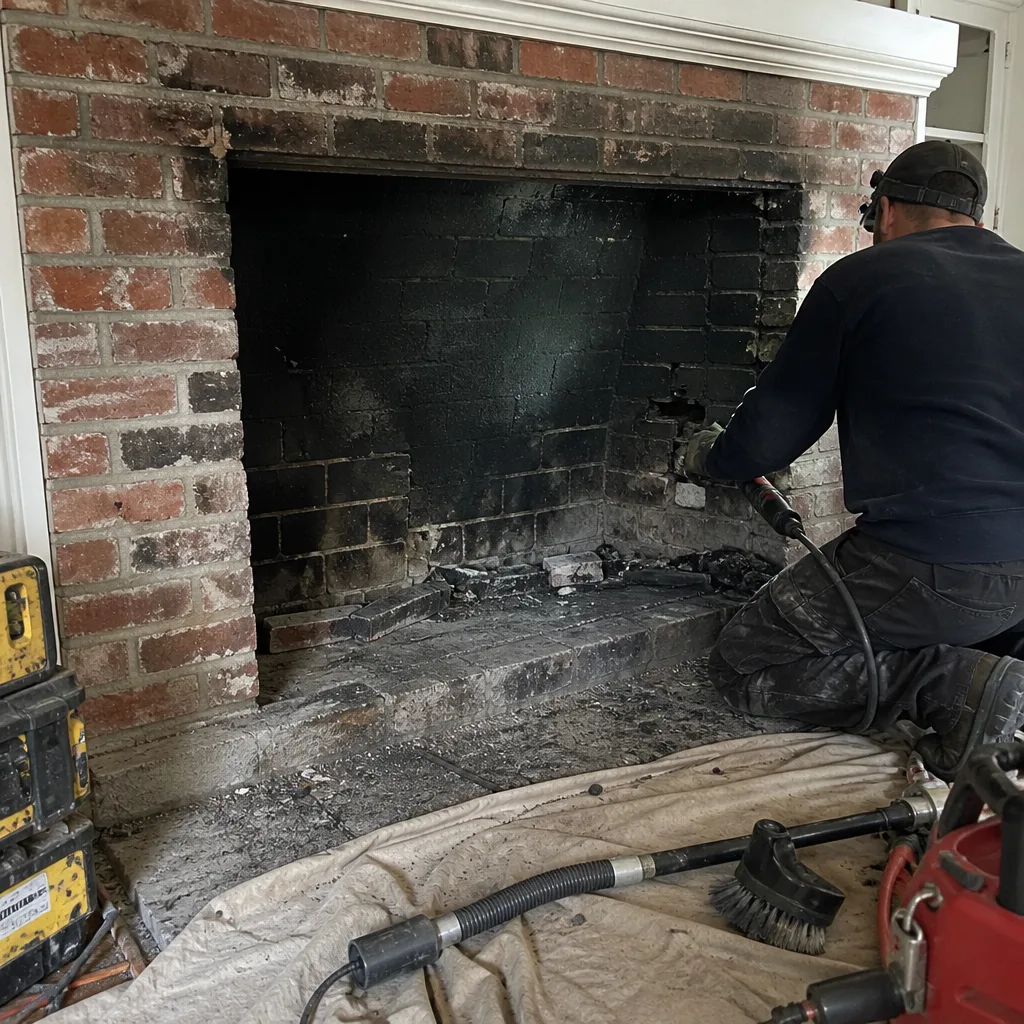 Before
 After
 Before
 After
Common Mistakes to Avoid
- Assuming no visible smoke means no fire. Slow-burning chimney fires produce little visible smoke. A rumbling sound, a sharp smell, or a glowing stovepipe is enough reason to act.
- Opening the firebox door to check. The extra oxygen can make a smoldering fire flare up. Close the doors and get out.
- Using the fireplace after an earthquake without an inspection. Sun Valley sits in a seismic zone. A flue crack after shaking is invisible from the outside and is a serious fire hazard.
- Spraying water down a hot flue. Thermal shock can crack or shatter the liner. Leave it to the fire department.
- Skipping the annual inspection because the fireplace “works fine.” A working fireplace isn’t the same as a safe flue. The failure you can’t see is the one that causes the fire.
- No pre-incident documentation. Without a record of the chimney’s condition, your insurance claim becomes a debate you’re likely to lose.
- Hiring a generalist for chimney work. A pressure-washing company that added chimney sweep to its menu isn’t going to catch a hairline liner crack. Hire a chimney specialist.
When to Call a Professional
Call a professional the same day if you’ve seen flames or smoke escaping the chimney, smelled a sharp burn during or after a fire, had a nearby earthquake or wildfire, or noticed soot streaks, cracks, or a loose cap. Book an inspection if the fireplace hasn’t been looked at in a year or more, or if you’ve recently bought a Sun Valley home and don’t have records for the chimney. We answer 24/7 and dispatch from 7am to 7pm, Sunday through Friday. Chimney Sweep Sun Valley offers free estimates in Sun Valley. Call (855) 710-2744. Our technicians have up to 13 years of experience. A sweep is the starting point, and an inspection tells you what your flue actually needs. From the firebox to the crown, we handle the entire system, and nothing gets recommended without camera evidence you can see for yourself.
Frequently Asked Questions
Stop adding fuel, close the fireplace glass doors, get everyone out of the house, and call 911 from outside. Don’t open the firebox door or spray water into the flue. Call (855) 710-2744 after the fire department clears the house, and we’ll inspect the flue before you use the fireplace again.
You can’t know from the outside. A camera inspection is the only reliable way to confirm the flue liner is intact after seismic shaking. Look for soot streaks, a leaning chimney, a shifted cap, or a fireplace door that no longer closes, but treat a clean exterior view as unconfirmed until inspected. Call (855) 710-2744 to book a Sun Valley inspection.
Not until the chimney has been checked for ember intrusion, ash loading and heat damage to the cap and crown. Wildfire ash is abrasive and can degrade a liner faster than normal soot. Call (855) 710-2744 to schedule a sweep and inspection.
Keep the last inspection report, the sweep log, any installation records (liner, cap, crown), before photos, and your insurance contact list. Keep a paper copy somewhere you can grab it fast, and scan everything to your phone. If you don’t have a baseline, our photo report creates one. Call (855) 710-2744.
Yes. A cap keeps water, debris and animals out of the flue and reduces ember intrusion during wind events. We install purpose-built caps from Gelco and Famco, and we replace damaged caps and crowns as their own service line. Call (855) 710-2744 for a free estimate.
Once a year is the baseline, and more often if the chimney has been exposed to an earthquake, a nearby wildfire, or heavy use. If anything about your system feels off, book an inspection rather than waiting. Call (855) 710-2744.
The Bottom Line
Chimney emergencies in Sun Valley tend to be neighborhood events, not just house events. The Santa Ana winds, seismic activity, and wildfire proximity each create a specific risk profile that a reactive phone call can’t fully address. Build the plan before the season turns: a baseline inspection, a sweep before the wind months, a check of the cap and crown, working alarms, and an emergency file you can grab in ten seconds. Know the first-ten-minutes sequence cold. When something does go wrong, call a specialist who can show you what’s actually happening inside your flue, not someone guessing from the driveway. From the firebox to the crown, we handle the entire system.
Call (855) 710-2744. We answer 24/7. Fast dispatch from 7am to 7pm, Sunday through Friday. Chimney Sweep Sun Valley offers free estimates in Sun Valley, and nothing gets recommended without camera evidence you can see yourself.
Written by the team at Chimney Sweep Sun Valley.